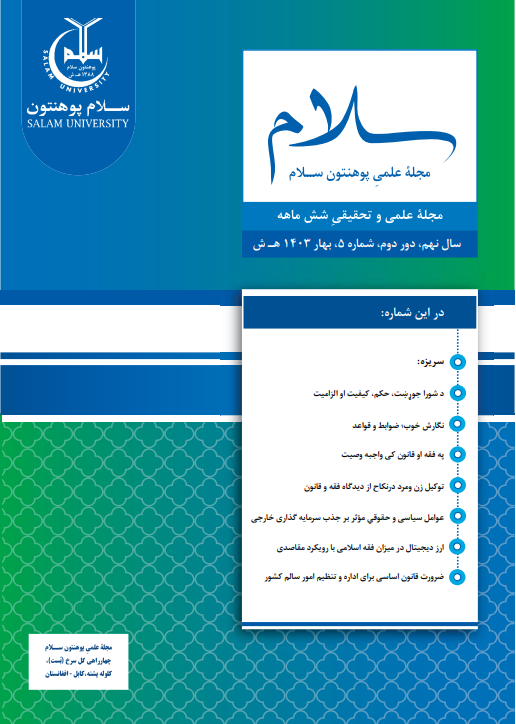
Cryptocurrency in Islamic Jurisprudence from a Maqasid (Objectives)-Based Approach
DOI:
https://doi.org/10.64104/SecondRound.Issue.5.n6.2024Keywords:
Ruling, Currency, Jurists, Maqasid (Objectives), Islamic Economics, Islamic Jurisprudence, CryptocurrencyAbstract
Cryptocurrency is an emerging issue, due to its numerous complexities and widespread ambiguities, it requires detailed study. This study aims to precisely define and explain cryptocurrency and then analyze its position within Islamic jurisprudence using modern scientific data.
The findings indicates that cryptocurrency has emerged within the context of the internet and possesses an uncertain nature, leading to significant differences of opinion among jurists and religious scholars regarding its legal identity. The majority of contemporary Islamic jurists and scholars of Islamic economics have deemed cryptocurrency as impermissible due to the widespread ambiguity surrounding its nature, the potential for deceit in transactions, the lack of governmental backing and oversight, and its general incompatibility with the objectives of Shariah concerning the preservation of wealth.
Based on the extensive research provided by the majority of jurists, this study concludes that both trading in cryptocurrency and conducting transactions with it are not permissible. This ruling has been issued in the absence of explicit textual evidence or direct analogy, and with consideration of the general welfare of people, it can be viewed through the principle of "Sadd al-Dhara'i" (blocking the means to harm). However, with changes in public interest, circumstances, and the resolution of its jurisprudential challenges, this ruling could be subject to change